
Resources
I'm a Digital Architect. Here's What That Actually Means for Entrepreneurs.
Every year, it feels like a new job title gets invented. Growth hacker. Prompt engineer. Content strategist. Community architect. If you’re a business owner trying to figure out who to hire, it can feel like the goalposts move every few months, and you’re left Googling a term you half-remember from a LinkedIn post, hoping it means what you think it means.
I’ve felt this myself, on the other side of it. I know the scope of what I actually do for my clients, but I’ve also known, for a while, that the work spans more than any single title captures. Recently I came across a term for it, Digital Architect. It’s not a new word, it’s just not one most business owners run into. But reading the description felt less like discovering something new and more like finally being handed the right word for something I’d been doing without a name for it.
The Real Problem: You’re Hiring for a Title, Not a Result
Here’s what actually happens for most entrepreneurs. You know something’s missing in your marketing or your online presence. Maybe your website feels outdated, or your social media hasn’t moved the needle in months, or you just have a general sense that things aren’t connected the way they should be. So you go looking for help, and you search for the closest title you can think of: web designer, social media manager, marketing consultant.
You hire that person. They do exactly what their title says. The web designer builds you a nice site. The social media manager posts consistently. The consultant hands you a strategy document. And yet, somehow, nothing actually moves, because each of them was solving one piece of a puzzle none of them could see the whole picture of.
This isn’t a hiring mistake on your part. It’s a language problem. You searched for the title that matched the symptom you could see, not the person who could see the whole structure underneath it. And until recently, there wasn’t really a good word for that second kind of person.
I’ve watched this play out with business owners more times than I can count. Someone hires a web designer, gets a beautiful site, and six months later still isn’t getting calls from it, because nobody ever connected that site to a content plan, a search strategy, or a way of tracking whether it was actually working. The individual purchase wasn’t wrong. It just wasn’t attached to anything.
What a Digital Architect Actually Does
Think about what an architect does in construction. They don’t just pick paint colors or design one room. They design how the whole structure holds together, the foundation, the load-bearing walls, how the plumbing and electrical connect, how one decision in the blueprint affects every room that comes after it. A good architect is thinking three steps ahead of the interior designer, because nothing the interior designer does matters if the structure itself doesn’t hold.
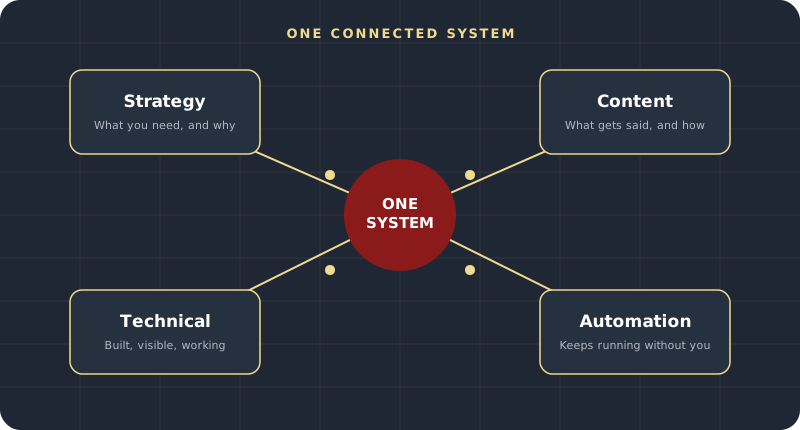
A Digital Architect does the same thing, just for a business’s digital presence. That means strategy (what does this business actually need, and why), content (what gets said, and how often, and in whose voice), technical infrastructure (does the website actually work, is it visible to search engines and AI platforms), and automation (does this all keep running when you get busy with actual clients). Not as four separate hires. As one connected structure, designed by one person who can see how a decision in one layer affects every other layer.
That’s the actual difference. It’s not that a Digital Architect does “more stuff.” It’s that the stuff is designed to work together, on purpose, from the start. A social post references the same story your website tells. Your Google Business Profile says the same thing your blog says. None of it happens by coincidence, because one person is holding the whole blueprint, not just their one assigned room.
Why This Role Exists Now, More Than It Used To
Ten years ago, this kind of hybrid role wasn’t as necessary. Marketing was simpler: post on social media, maybe run some ads, keep the website updated. You could genuinely hire specialists for each narrow piece and get by fine.
That’s changed, largely because of how people find businesses now. AI search platforms don’t just rank a list of links, they read your entire digital footprint, your website, your Google Business Profile, your content, and decide whether to cite you at all. A person who only understands content can’t fix a technical problem that’s making your site invisible to AI search. A person who only understands web development doesn’t know what story your business should actually be telling. The businesses that show up now are the ones where all of it was built to work together, which means someone had to be thinking about all of it at once.
That’s not a niche need anymore. It’s becoming the baseline. I’ve seen it directly in the data behind this shift: AI-referred visitors convert at roughly 2x to 9x the rate of traditional Google organic traffic, and that gap keeps widening as more people start with an AI assistant instead of a search bar. A business only shows up in that answer if its digital presence was built as one legible, connected system, not five disconnected pieces that happen to share a logo.
How to Know If This Is What You’re Missing
You probably don’t need a Digital Architect if you have one specific, well-defined problem: your logo needs a refresh, your site has one broken page, you need a single campaign run. Hire a specialist for that. It’ll be faster and cheaper.
But if you’ve hired multiple people over time, a designer here, a social media manager there, maybe a consultant who gave you a plan nobody executed, and you still feel like nothing connects, that’s the real sign. Not that any of them did bad work. It’s that nobody was responsible for how the pieces fit together. That’s the gap this role exists to fill.
A useful test: can you point to one clear thread connecting your website, your content, and how people actually find you, or does each one feel like it was built by someone who never spoke to the others? If it’s the second one, you’re not missing another specialist. You’re missing the person holding the blueprint.
If that sounds familiar, it’s worth taking an honest look at what’s actually connected in your business right now, and what isn’t. Get your free audit →
Frequently Asked Questions
What is a Digital Architect?
A Digital Architect is someone who designs and builds a business's entire digital system, strategy, content, technical setup, and automation, as one connected structure, rather than handling just one piece of it. The term describes the role, not a certification or licensed title.
How is a Digital Architect different from a marketing agency?
A typical agency usually specializes in one layer: strategy, or content, or ads, or web development. A Digital Architect works across all of them at once, because the layers are designed to depend on each other. You're not coordinating between three separate vendors who've never talked to each other.
Do I need a Digital Architect, or just a web developer or marketer?
If you have one specific, well-defined problem, a broken website, a single campaign, a logo, a specialist is often the faster and cheaper choice. If you don't have a clear, connected system behind your marketing and don't know which piece is actually the problem, that's the sign you need someone thinking about the whole structure, not just one room in it.
Is "Digital Architect" an official job title?
No, and that's part of the point of this post. It's not a licensed or standardized title the way "architect" is in construction. It's a description that's caught on because it captures a real, increasingly common way of working that older titles like "marketer" or "web designer" don't fully cover.
How do I know if I need one for my business?
A common sign: you've hired multiple specialists over time, a designer, a social media person, maybe a consultant, and you still feel like nothing connects. Each piece works fine on its own, but there's no single structure tying your strategy, your content, and your technical setup together.