
Resources
What Is an AI-Powered Content System?
Running a service business is consuming. By the end of the day, after seeing clients, handling invoices, and answering messages, the last thing most owners have energy for is figuring out what to post. The content sits in the back of their mind as something they know they should do, but it keeps getting pushed aside for the work that actually pays. Many owners prioritize client-facing work over content creation, and that is entirely reasonable. The problem is that disappearing from view for weeks at a time has real consequences for discoverability, trust, and local visibility over time.
This is the gap that an AI-powered content system is designed to close. Not by replacing the owner’s judgment or flooding social media with generic filler, but by handling the repetitive execution work that keeps stalling most people. Drafting, scheduling, publishing, and tracking can all be systematized inside an automated content workflow. The thinking, the voice, and the strategy still come from a real person. Building these systems for small businesses is the core of what I do at Work with Saffir, and what follows is a plain explanation of what an AI-powered content system is, how it works, and what it can realistically do for your business.
What Is an AI-Powered Content System?
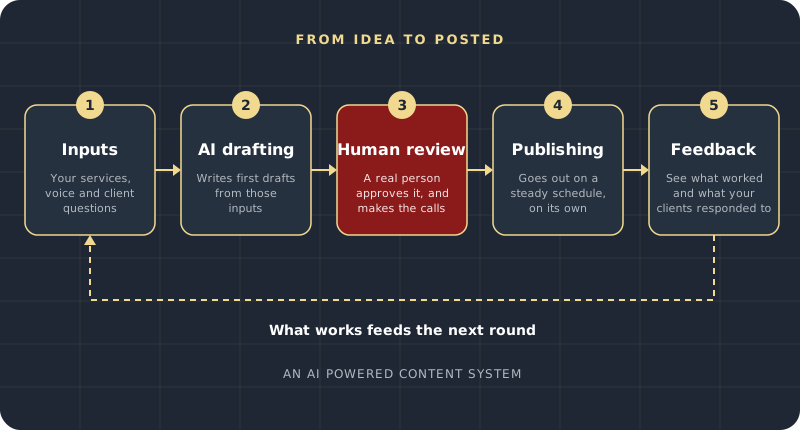
An AI-powered content system is not a single app you open once a week, type a prompt into, and hope for the best. It is a connected set of tools and processes that takes your business context, your ideas, and your voice, then moves content through a series of stages from draft to published post. The word “system” is what matters here. Think of it less like a product and more like a production workflow, an AI content pipeline, where AI does the heavy lifting inside each step.
It is a pipeline, not a product
When people ask what an AI-powered content system is, they are really describing a sequence of steps that content moves through: from a topic or brief, through drafting and review, to scheduling and publishing, and then into performance tracking. Each step can be partially or fully automated, but the strategy and brand decisions still belong to a real person at the start. Without that foundation, no amount of automation produces anything worth reading.
The pieces that make it run
At a high level, every AI content management system has five core components working together:
- Inputs, your services, brand guidelines, and the questions your clients ask most often
- Drafting layer, where AI generates text from those inputs
- Human review step, where a person checks the output before anything goes live
- Publishing layer, which gets content onto the right platform at the right time
- Feedback loop, where analytics inform what to create next
Each piece serves a specific function. Remove one and the system starts to break down in predictable ways.
How the AI Content Pipeline Works from Idea to Posted
Understanding the architecture is one thing. Seeing how it actually functions on a busy Tuesday is another. The three main stages are drafting, scheduling, and optimizing, and each one addresses a specific place where most small business owners get stuck.
Drafting without doing the heavy lifting yourself
The drafting stage draws from a set of approved inputs specific to your business. That might include your service descriptions, tone of voice notes, answers to questions clients ask most often, or past content that performed well. The AI generates a draft based on those inputs. That draft still goes through a human review before anything gets published, because the goal is content that sounds like you, not a generic business account. Systems that skip this step or rely on unconstrained generation risk producing bland or inaccurate outputs that do not connect with anyone specific.
Scheduling so content goes out even during your busiest weeks
Once content is approved, it gets loaded into a scheduler that publishes to the right platform at the right time without you logging in manually. For a plumber or a physiotherapist with back-to-back client appointments for three weeks straight, this means their online presence stays active even when they have no mental bandwidth for social media. An automated content workflow gives those hours back without leaving a gap in your visibility.
Optimizing based on what is actually resonating
After content is published, the system tracks how it performs: which posts drive inquiries, which topics get engagement, which formats your audience responds to. That data feeds back into future planning. Over time, the content improves because it is shaped by what works for your specific audience, not a template designed for no one in particular.
What This Realistically Means for a Busy Small Business Owner
Overpromising loses trust faster than underdelivering. The real value of an AI-powered content system is not magic output. It is consistency, and consistency is exactly what most small business owners are missing.
Staying visible without making it a daily job
Posting consistently over months builds familiarity and trust with potential clients before they ever reach out. For a local business, consistent publishing can also support Google Business Profile visibility and local search ranking in ways that sporadic posting usually does not. Showing up reliably versus going quiet for three weeks can mean the difference between being found and being invisible when someone nearby is ready to hire. A content system does not make the content perfect. It makes sure the content actually exists on a schedule, which is the part most owners never get to. Being easy to find matters even more as customers start asking AI assistants instead of search engines, which I wrote about in The Rise of AI Search: A Timeline.
Content that still sounds like you
The most common concern I hear is that AI-powered content creation sounds robotic or interchangeable. When a system is built properly, starting with the owner’s voice, real service examples, and brand guidelines built into every prompt, the output sounds like the person behind the business. When someone grabs a generic AI tool and uses it with no context loaded, they get flat, templated content that does not connect with anyone specific. The quality of what you put in determines the quality of what comes out. That principle does not change just because AI is involved.
Why a Custom-Built System Outperforms a Generic Tool
Off-the-shelf content tools hand you a blank canvas and assume you know what to do with it. Most small business owners do not have the time or background to build effective prompts, document their brand voice, connect tools together, and monitor what is working. That is not a criticism. It is just not what they were hired to do, and it is not where their energy should be going.
The problem with off-the-shelf content tools
Off-the-shelf content tools often underdeliver because they require setup knowledge most owners do not have, they do not account for industry-specific nuance, and they still demand ongoing attention to keep running well. The owner ends up managing a tool instead of running their business, which defeats the point entirely. The automation is there, but the strategy layer is absent, so the output stays mediocre regardless of how much time gets poured into prompting.
How I build these systems differently
Every client I work with starts with a free audit of their current online presence, covering their website, Google Business Profile, social content, and competitive landscape, before I make a single recommendation. That way, the system is grounded in what is actually happening rather than assumptions. Each system I build matches how that specific client communicates, what their clients need to hear, and what content format fits their market. Nothing is templated and handed over with a wave. The goal is an AI content system that runs consistently without the owner’s daily involvement and that improves over time using real performance data from their actual audience.
How to Know If You Are Ready, and What to Do First
Some owners are ready to implement a full AI-powered content system immediately. Others need to understand what is broken in their current setup first. Either way, the starting point is the same: an honest look at what is working and what is not, before investing in any tool or service.
Start with an audit before you spend anything
The worst move a small business owner can make is to buy software or hire a service before understanding where they actually stand. An audit of the current website, Google Business Profile, and social content gives a clear picture of what is missing and what kind of system would actually solve the problem. I offer this audit free, with no obligation and no sales call required before I make a recommendation.
Questions worth asking before you commit
Before moving forward with any system, you should be able to answer a few things. Do you have a clear sense of who your content is for? Do you have at least a rough idea of your business’s voice and tone? Is your website set up to receive inquiries from someone who finds you through content? These are not gatekeeping questions. They are readiness checks that make the first few weeks of a system go much more smoothly.
What an AI-Powered Content System Actually Gives You
An AI-powered content system takes the execution burden off a small business owner so they can stay consistently visible without making content creation a daily obligation. The system still needs a real strategy and a real voice behind it. AI handles the repetitive work inside the automated content workflow. The person behind the business makes the judgment calls about what is true, what is on brand, and what serves their clients well. Those judgment calls cannot be automated, and they should not be.
If you are curious what a system built around your business might look like, a good first step is seeing where you stand right now. Ask me for a free audit. No sales call and no obligation. I will look at your website, Google profile, social channels, and competitors, and send you a clear picture of what is working and what is not.
Frequently Asked Questions
What is an AI-powered content system?
It is a connected set of tools and steps that moves content from idea to published post: inputs about your business, AI drafting, a human review, scheduled publishing, and a feedback loop from performance data. The strategy and the voice still come from a real person.
Does a person still review everything before it goes out?
In a properly built system, yes. The drafting is done by AI, but a human review step sits before anything is published, because the goal is content that sounds like you, not a generic business account.
What should I have in place before starting?
A clear sense of who your content is for, at least a rough idea of your business's voice and tone, and a website set up to receive inquiries from people who find you through content.